Cyprus After Bi-Zonal, Bi-communal Federation
I am writing this piece in language that anyone who is willing to learn about the Cyprus issue objectively can understand drawing on people who have lived through events, researching the history of negotiations, and closely following the process.
As anyone who follows international politics to some extent knows, the solution model for the Cyprus Problem that has been accepted globally and still remains valid is the bi-communal, bi-zonal federation.
It is no coincidence that negotiations between the two Cypriot leaders are conducted on this common ground today.
In the period ahead, it is also possible that the missing elements of this framework will be completed.
At Crans-Montana (2017), a large part of the agreement had already taken shape.
What remained were the critical but equally difficult give-and-take chapters that would determine the fate of a settlement.
Time will show how, and in which direction, this process will move.
If an agreed settlement is implemented, a united Cyprus would evolve from a unitary structure into a federal system based on two politically equal communities and two constituent states.
A large part of Greek and Turkish nationalists who strongly oppose this—along with many circles that benefit from the current division do not even know what a federation means.
Moreover, they are unaware that many countries around the world are governed in this way.
This first appears comical, and then becomes a typical example of defending political agendas blindly with the confidence that ignorance can produce.
Any third party who analyses Cyprus from a distance, objectively, could easily reach the same conclusion by looking at these groups’ common narratives.
After clarifying these basics, I think it is useful to address possibilities that are not often discussed.
There are multiple state models into which a Cyprus that has reached a settlement under a bi-communal, bi-zonal federation could evolve over time.
Which one becomes reality depends entirely on internal and external dynamics.
If the Cypriot peoples confront the fractures between them and those inherited from the past; if they realise that the ties presented as the ‘motherland’ do not serve their own interests; and if they truly take their will into their own hands then, over time, one of the following possibilities may emerge:
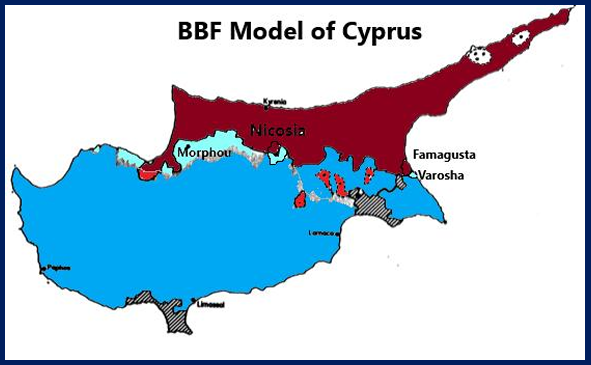
1. Cyprus continues to exist as a bi-communal, bi-zonal federation.
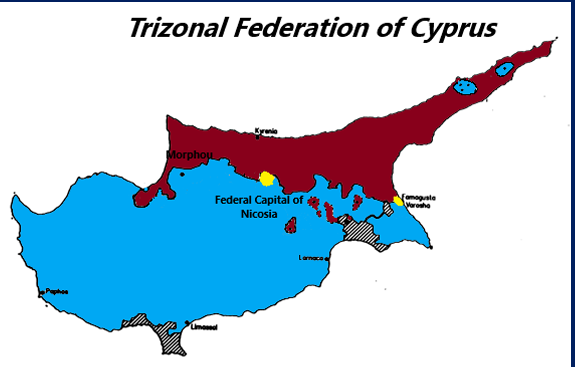
2. Cyprus may evolve into a bi-communal, tri-zonal federation.
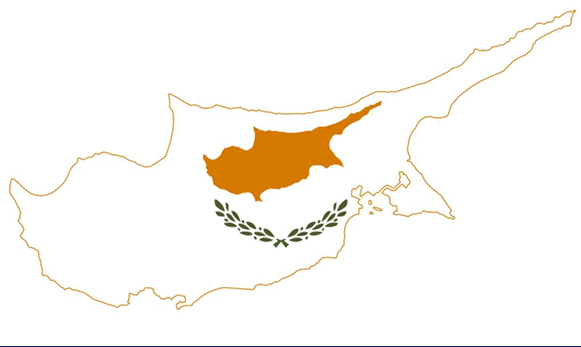
3. Over time, Cyprus may transform into a unitary state (if the communities realise their differences are not as deep as assumed).
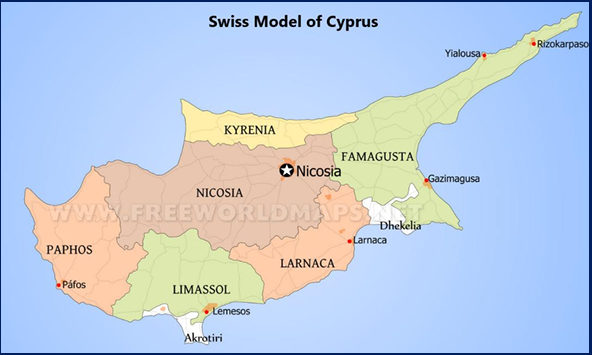
4. Cyprus may evolve into a unitary state with a Swiss-style cantonal system.
5. Cyprus evolves toward a confederal structure (those who follow the negotiation history know that the EU does not want this).
6. Cyprus is divided into two separate states (those who follow the negotiation history know that the EU does not want this).
A state with strong ties to the European Union already has many EU countries it can take as examples in order to manage its internal dynamics peacefully and in a healthy way. also the EU aquis will check the state is applying the rule of law properly and maintaining the possible hate crime and discrimination exc…
For peoples whose accent, culture, and everyday life are largely the same—differing mainly in the languages they speak—it will of course take time to overcome the traumas created by fifty years of separation and the divisive narratives layered on top of them.
However, claiming that people who lived side by side for centuries during the Ottoman period and sustained relationships would inevitably be dragged into chaos today is nothing more than reading the exceptional and traumatic period of 1960–74 only from the angle that suits political agendas.
Such claims are often not taken seriously by Cypriots; they also carry the risk of making those who voice them look ridiculous.