Arablar Mosque: Stone, Memory and the Promise of Peace
In the quiet weave of winding streets within the Venetian walls of Nicosia, just a short stroll from the bustle of Faneromeni Square, stands a small, honey-coloured building that many pass without a second glance. Few realise that this place of worship is one of our island’s most eloquent storytellers. Today it is known as the Arablar Mosque. Older maps and Greek memory call it Stavros tou Misirikou. Between these two names lies a history as layered as the stone from which it is built.
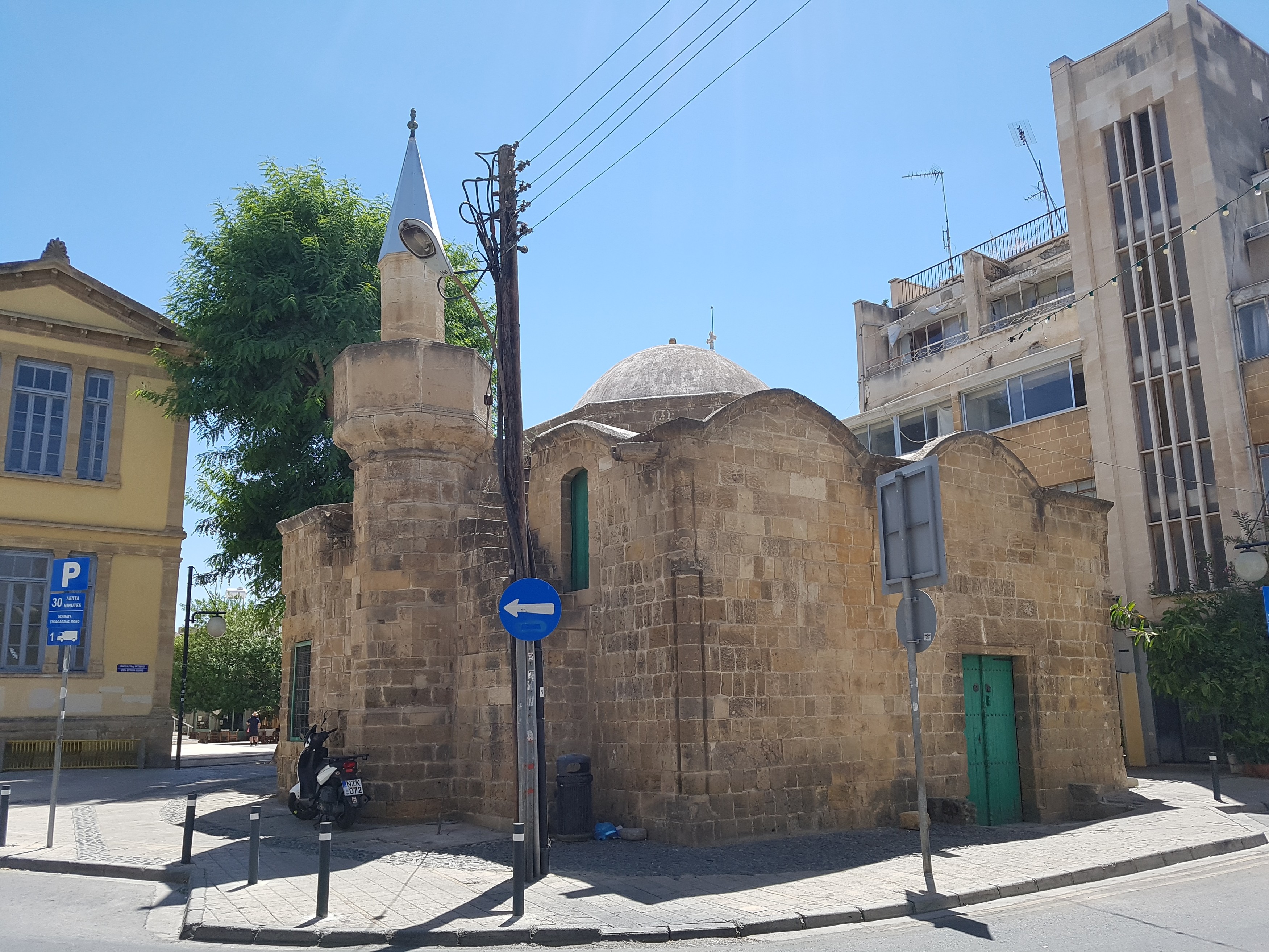
Arablar Mosque in the old town of Nicosia
Set along Lefkonos Street in the old town, the monument is modest in scale, almost shy beside the larger churches and civic buildings nearby. And yet, the closer you draw, the more fascinating it becomes. Its pale limestone façade, softened by centuries of Mediterranean sun, shows the refined hand of late medieval craftsmanship. Gothic buttresses brace its outer walls and elegant carved details whisper the influence of the Venetian period, when Cyprus stood at the crossroads of East and West.
Architecturally, the building is a charming, deceptively simple hybrid. Scholars generally date it to the first half of the sixteenth century, when Cyprus was under Venetian rule, and identify it originally as a small Orthodox church. Its plan reflects the classic domical Byzantine tradition, with a nave flanked by shallow aisles and terminating in a semicircular apse.
Yet this Byzantine core is wrapped in later Gothic and Renaissance touches. And these pointed forms, buttresses and decorative stonework feel unmistakably Western. In the end, it is neither fully one thing nor the other. Instead, it is Cypriot: a synthesis shaped by centuries of encounter and interaction between cultures. But the blending of cultural influence did not end there.
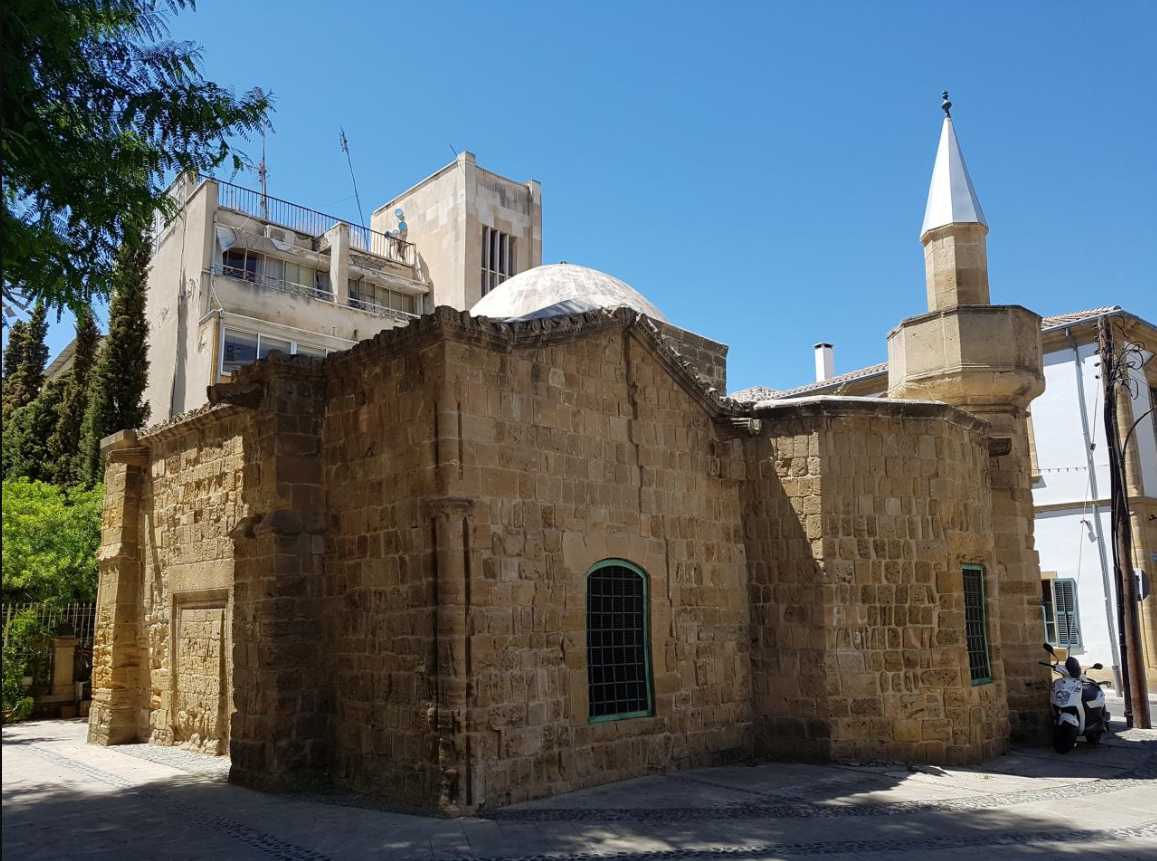
Architectural details revealing the monument’s layered Byzantine and Gothic character
When the Ottomans conquered Nicosia in 1570, the church was converted into a mosque. The transformation, as was often the case across the island, was practical rather than destructive. Certain doorways were closed; a small minaret rose at one corner; a mihrab was inserted into the southern wall to indicate the direction of Mecca. In other words, the essential structure and purpose remained. Stone endured. The direction of prayer shifted, but the songs of worship continued. And so the building acquired a second life.
Equally fascinating is that with this second life, the building also acquired a second name. “Arablar” means “of the Arabs,” and one common explanation links the mosque to Arab or Egyptian communities in Ottoman Nicosia. The Greek name, Stavros tou Misirikou, which translates to “the Cross of Misirikos,” has sparked debate and supposition. Some suggest that “Misirikos” derives from the Arabic Misr, meaning Egypt, perhaps connected to people of Egyptian origin, brought to Cyprus in earlier periods.
Others propose a more romantic etymology: that the name evolved from “Monsieur Henri,” referring to the Frankish King Henry II (Erikos in Greek). The idea being that over time, local (mis)pronunciation pared down the name Monsieur Erikos to Misirikos. The truth remains uncertain. Yet the very existence of these parallel explanations, Arab, Egyptian, Frankish, Greek, reveals something profound about the monument. Its name, like its architecture, refuses to belong to a single narrative.
This layered identity mirrors the island itself. Cyprus has known Byzantines and Lusignans, Venetians and Ottomans, British administrators and independent citizens. Each era left marks on the landscape. Some monuments declare those shifts dramatically. However, the Arablar Mosque or Stavros tou Misirikou has assimilated them all with quiet, unassuming wisdom.
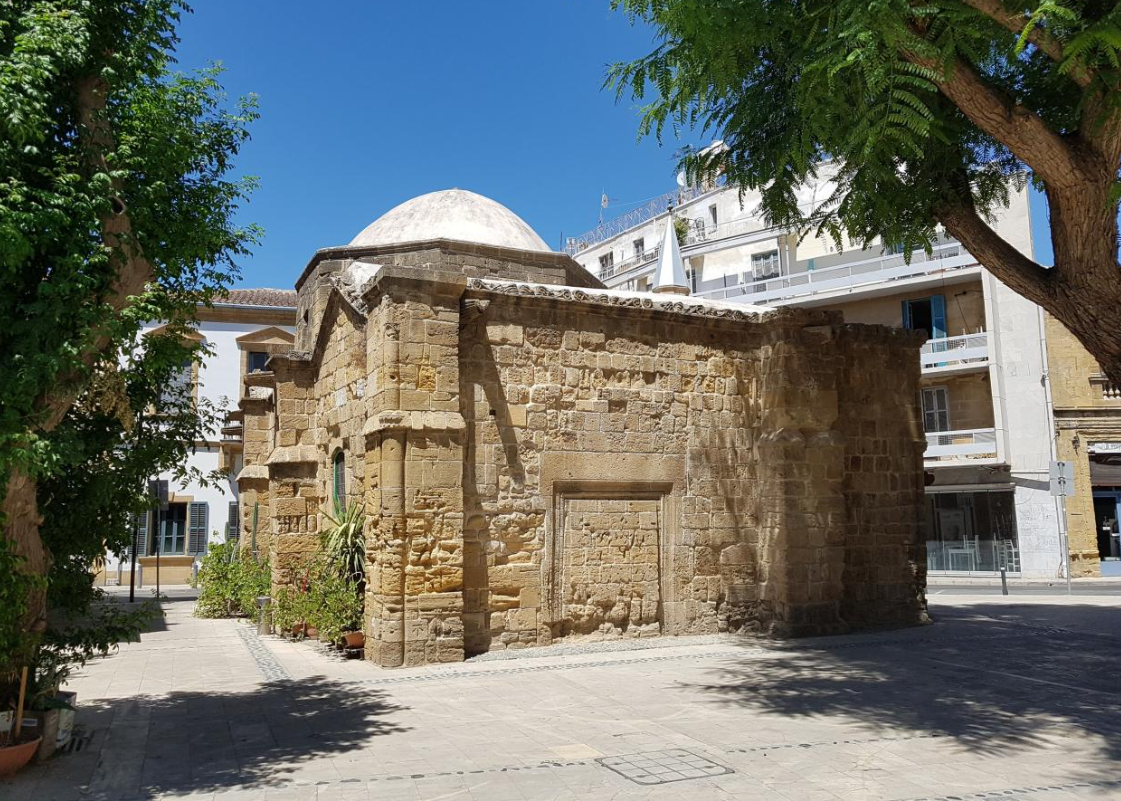
A monument where layers of devotion and memory continue to meet
There is something deeply moving about a building that has sheltered both Christian liturgy and Muslim prayer. The dome that once gathered the murmur of Byzantine chant later held the measured cadences of Qur’anic recitation. The same stones absorbed incense as well as the quiet rustle of prayer rugs. Rather than erasing what came before, history here has layered devotion upon devotion upon devotion.
In a city long defined by division, to me this small monument feels almost like a parable. Its Gothic buttresses do not quarrel with its Byzantine dome. Its mihrab does not erase its apse. The building simply stands: weathered, dignified, whole. It reminds us that identity is cumulative rather than exclusive. That evolution need not mean destruction. That continuity can survive conquest.
Its size may be modest, but I believe that the symbolic weight of the Arablar Mosque is immense. It embodies the multicultural inheritance of Cyprus not as an abstract concept but in stone and mortar. It invites us to look closely, to trace with our eyes the meeting lines between East and West, Orthodoxy and Islam, medieval Europe and the Levant. It reminds us that our island’s resilience is not diminished by its evolving form but rather, it is affirmed.
Arablar Mosque, Stavros tou Misirikou: call it by either name, or both. It remains a testament to Cyprus as a meeting place. A reminder that faiths and cultures, though different in language and ritual, have shared the same ground. And in its enduring stillness, it offers something gentle and rare: a vision of unity not imposed, but organically emergent. As if wind and time have shaped its stone into quiet hope for peace.